Category: Uncategorized

Standard

How IT Asset Disposition Supports Corporate Sustainability Goals

In today’s environmentally conscious world, businesses are increasingly integrating sustainability into their corporate strategies. One area often overlooked but critical to achieving sustainability goals is IT Asset Disposition (ITAD) — the process of securely disposing, recycling, or repurposing end-of-life IT equipment. This blog explores how effective IT asset disposition supports corporate sustainability, reduces environmental impact, and drives long-term business value. What is IT Asset Disposition (ITAD)? IT Asset Disposition involves the secure and environmentally responsible disposal or reuse of outdated or surplus IT equipment, such as servers, laptops, hard drives, and networking gear. ITAD providers ensure data security, regulatory compliance, and sustainable recycling or refurbishment. The Connection Between ITAD and Sustainability 1. Reducing E-Waste and Environmental Harm E-waste is one of the fastest-growing waste streams globally, containing toxic substances that can pollute soil and water if not managed properly. 2. Supporting the Circular Economy Corporate sustainability increasingly focuses on the circular economy — a system where resources are kept in use for as long as possible through recycling and reusing. 3. Ensuring Compliance and Responsible Disposal Regulations like Singapore’s PDPA and environmental laws mandate secure data destruction and responsible e-waste handling. 4. Enhancing Corporate Reputation and Stakeholder Trust Demonstrating commitment to sustainability through responsible IT asset disposition can improve brand reputation and satisfy stakeholder expectations. How Maxicom Global Singapore Helps You Achieve Sustainability Goals Maxicom Global Singapore offers comprehensive IT asset disposition services designed to support your corporate sustainability initiatives: Conclusion IT Asset Disposition is more than just an IT process — it’s a strategic enabler of corporate sustainability. By adopting responsible ITAD practices, businesses can reduce environmental impact, comply with regulations, and strengthen their sustainability credentials. Ready to Align Your IT Asset Disposal with Your Sustainability Goals? Contact Maxicom Global Singapore to learn how our certified ITAD services can help your business achieve its environmental and social responsibility objectives. ? purchase@maxicom.sg | www.maxicom.sg

Standard

Best Practices for E-Waste Recycling in Singapore: What Businesses Need to Know

As technology evolves rapidly, businesses in Singapore face the constant challenge of managing electronic waste (e-waste) responsibly. Improper disposal of outdated IT equipment not only poses environmental risks but also legal and security concerns. This blog covers the essential best practices for e-waste recycling in Singapore that every business should follow to stay compliant, protect sensitive data, and promote sustainability. Why Proper E-Waste Recycling Matters E-waste contains hazardous materials like lead, mercury, and cadmium, which can harm the environment and human health if not disposed of correctly. Additionally, discarded IT assets often store sensitive business data, making secure disposal critical. Singapore’s National Environment Agency (NEA) enforces strict regulations on e-waste management, making it mandatory for businesses to follow responsible recycling practices. Best Practices for E-Waste Recycling in Singapore 1. Partner with Certified E-Waste Recyclers Choose e-waste recyclers certified by recognized organizations such as the NEA’s Extended Producer Responsibility (EPR) scheme or international certifications like R2 or e-Stewards. 2. Secure Data Destruction Before Disposal Before recycling, it’s essential to securely erase all data from electronic devices to prevent data breaches. 3. Maintain Detailed Asset Tracking and Documentation Keep accurate records of all IT equipment sent for recycling, including serial numbers, condition, and recycling certificates. 4. Implement a Sustainable IT Asset Lifecycle Management Program Plan the lifecycle of IT assets from procurement to disposal to maximize value and reduce waste. 5. Educate Employees on E-Waste Disposal Policies Train staff on proper e-waste disposal procedures to prevent accidental data leaks or improper dumping. How Maxicom Global Singapore Helps Businesses with E-Waste Recycling Maxicom Global Singapore offers comprehensive IT asset disposition services, including secure data destruction and certified e-waste recycling. Our processes ensure your business complies with local regulations while minimizing environmental impact. Conclusion Proper e-waste recycling is crucial for businesses to protect the environment, comply with Singapore’s regulations, and safeguard sensitive information. By following these best practices and partnering with trusted ITAD providers like Maxicom Global Singapore, your company can contribute to a greener future while managing IT assets responsibly. Ready to Manage Your E-Waste Responsibly? Contact Maxicom Global Singapore today to learn more about our secure, compliant, and sustainable e-waste recycling services. ? purchase@maxicom.sg | www.maxicom.sg

Standard

Top IT Security Risks in Asset Disposal and How to Avoid Them

In today’s digital age, businesses constantly upgrade their IT infrastructure to stay competitive. However, disposing of outdated IT assets can expose companies to significant security risks if not managed properly. From data breaches to compliance violations, insecure asset disposal can lead to costly consequences. In this blog, we’ll explore the top IT security risks associated with asset disposal and share practical steps your business can take to avoid them. 1. Data Leakage from Improper Data Sanitization One of the biggest risks during IT asset disposal is sensitive data leakage due to inadequate data wiping or destruction. Simply deleting files or formatting drives does not guarantee data is unrecoverable. How to Avoid It: 2. Loss of Chain of Custody When IT assets change hands, it’s critical to maintain a clear record of their handling. Failure to track assets can lead to misplaced devices containing confidential information, increasing breach risks. How to Avoid It: 3. Non-Compliance with Data Protection Regulations Many countries, including Singapore, have strict regulations governing data protection (e.g., PDPA). Improper disposal can lead to regulatory fines and damage to reputation. How to Avoid It: 4. Insider Threats During Disposal Process Disposal processes often involve multiple stakeholders, including third-party vendors. Insider threats — whether accidental or malicious — can jeopardize sensitive data. How to Avoid It: 5. Environmental Risks and Liability Discarding IT equipment irresponsibly not only harms the environment but can also expose companies to legal liabilities. How to Avoid It: Conclusion Disposing of IT assets securely is crucial to protecting your business from costly data breaches, regulatory penalties, and reputational harm. By understanding these common security risks and partnering with certified ITAD experts like Maxicom Global Singapore, your business can ensure safe, compliant, and sustainable asset disposal. Ready to Secure Your IT Asset Disposal? Contact Maxicom Global Singapore today to learn how our certified IT asset disposition and data destruction services can protect your business from IT security risks. ? purchase@maxicom.sg | www.maxicom.sg

Standard

Preparing Your Singapore Business for 2025: The Future of IT Asset Disposition

As Singapore continues its transformation into a global smart nation, businesses are evolving their IT infrastructure at an unprecedented pace. With this growth comes a critical, often overlooked question: What will you do with your old IT equipment? In 2025, the answer will no longer be optional — IT Asset Disposition (ITAD) must be strategic, secure, and sustainable. Why ITAD Is a Business Priority in 2025 Whether you’re upgrading servers, moving to the cloud, or replacing hundreds of laptops, how you manage end-of-life assets affects: 2025 ITAD Trends to Watch ? Zero-Trust Data Destruction:Companies must go beyond basic formatting. Full audit trails and certified data erasure are essential. ♻️ Circular IT Practices:Expect more pressure to reuse, refurbish, and recycle responsibly. Landfilling is no longer acceptable. ? Stricter Regulatory Oversight:Singapore’s NEA and PDPC will increase enforcement on both data protection and e-waste handling. ? ESG Reporting Requirements:Companies will need to document and disclose their ITAD processes to investors, partners, and the public. How Maxicom Global Singapore Helps You Prepare At Maxicom Global Singapore, we provide a forward-thinking ITAD framework designed for 2025 and beyond: Your Next Step Toward 2025 ITAD is no longer just an IT issue — it’s a boardroom-level decision that impacts your business’s reputation, security, and sustainability. Partner with Maxicom Global Singapore to ensure your company stays ahead of regulations, recovers value, and protects sensitive data.

Standard

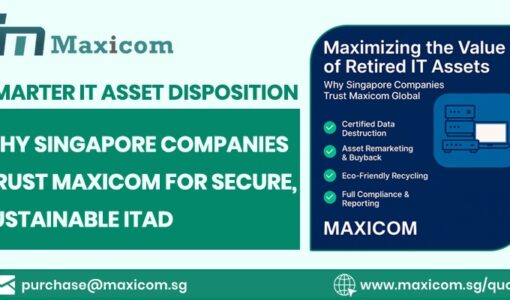
Maximizing the Value of Retired IT Assets: Why Singapore Companies Trust Maxicom Global

As Singapore’s business ecosystem rapidly modernizes, companies are upgrading their IT infrastructure more frequently than ever. But what happens to the old servers, laptops, and networking gear? At Maxicom Global Singapore, we believe retired IT assets are not waste — they’re opportunity. Through responsible IT Asset Disposition (ITAD), businesses can unlock value, protect sensitive data, and contribute to a greener, more sustainable Singapore. Why IT Asset Disposition (ITAD) Matters When IT equipment reaches its end of life, companies face multiple challenges: Without a proper ITAD strategy, companies risk data breaches, legal penalties, and reputational damage. How Maxicom Global Delivers End-to-End ITAD Solutions At Maxicom Global Singapore, we’ve built a reputation for providing secure, reliable, and eco-friendly IT asset disposition services. Here’s how we help: ✅ Certified Data DestructionWe use advanced software wiping, degaussing, and physical shredding to guarantee 100% data erasure, backed by detailed certificates. ✅ Asset Remarketing & BuybackWe assess the resale value of your retired hardware, offering competitive buyback programs to turn obsolete assets into cash flow. ✅ Eco-Friendly RecyclingWe work with R2-certified recyclers to ensure all e-waste is handled sustainably, minimizing environmental impact. ✅ Full Compliance & ReportingOur process aligns with Singapore’s regulations, providing transparent tracking, audit-ready reports, and ESG-aligned documentation. Why Leading Singapore Companies Choose Maxicom Maxicom Global Singapore isn’t just an ITAD vendor — we’re your strategic partner. Our clients trust us because we deliver: From SMEs to multinational enterprises, we help organizations optimize their IT lifecycle, reduce costs, and meet their sustainability goals. Ready to turn your retired IT assets into business value?Contact Maxicom Global Singapore today for a free ITAD consultation

Standard

Ransomware in Singapore: The Critical Role of Secure Data Destruction

As ransomware attacks escalate across Singapore, local businesses face a dual threat:1️⃣ The immediate impact of encrypted or stolen data, and2️⃣ The long-term risks of residual data left on decommissioned servers, hard drives, and backup devices. Many organizations focus on cybersecurity tools like firewalls and backups, but they overlook the crucial last step: ensuring that retired IT assets no longer carry sensitive data that could be exploited in future attacks. This blog explains why secure data destruction is essential in Singapore’s high-risk ransomware environment and how businesses can implement best practices to stay protected. Why Ransomware Is on the Rise in Singapore Singapore’s fast-growing digital economy makes it a prime target for ransomware gangs. Key drivers include: ? Sophisticated Threat Actors:Global ransomware groups are targeting financial institutions, hospitals, and government agencies in Singapore, where the stakes (and potential ransom payouts) are high. ? Expanded Attack Surfaces:With many companies shifting to hybrid or remote work, corporate networks have become more fragmented, creating more entry points for attackers. ? Strict Data Privacy Regulations:Under the Personal Data Protection Act (PDPA), Singaporean companies face steep fines if they mishandle personal or sensitive data. A breach caused by leftover data on decommissioned devices can result in regulatory penalties even after paying a ransom. The Role of Secure Data Destruction Secure data destruction is the process of permanently removing or destroying data stored on IT equipment, making it unrecoverable even by sophisticated forensic methods. Here’s why it matters: ? Beyond Simple Deletion:Deleting files or reformatting a hard drive does not remove the underlying data. It only removes file pointers, leaving the actual data recoverable by basic tools. ? Certified Physical Destruction:This involves physically shredding or pulverizing storage devices, ensuring complete destruction of data-bearing components like hard drives, SSDs, and tapes. ? Software-Based Data Wiping:Using specialized data erasure tools (following standards like NIST 800-88 or DoD 5220.22-M) overwrites every sector of the drive multiple times, making recovery impossible. ? Chain-of-Custody Documentation:A proper data destruction process includes detailed records showing when, where, and how each device was handled, giving you legal proof of compliance. Steps to a Successful IT Asset Disposition (ITAD) A successful ITAD process doesn’t happen by chance — it requires planning and expert support. 1️⃣ Asset AuditFirst, inventory all IT assets, especially those containing sensitive data (like servers, laptops, smartphones, backup tapes, and networking gear). This gives you visibility over what needs secure handling. 2️⃣ Select a Certified ITAD PartnerLook for a partner like Maxicom Singapore that holds international certifications (such as R2, e-Stewards, or ISO 27001) and understands local compliance under the PDPA. 3️⃣ Determine the Right Destruction MethodDecide whether to use software-based wiping (for reusable assets) or physical destruction (for obsolete or damaged devices). 4️⃣ Secure Logistics & Chain of CustodyEnsure assets are transported securely, with tracking at every step, to avoid loss or tampering in transit. 5️⃣ Get Certificates of DestructionA reputable provider will issue formal certificates for each destroyed asset, giving you audit-ready proof for regulators and stakeholders. Partnering with the Right IT Equipment Buyer Not all IT equipment needs to be destroyed — some still hold resale value.Maxicom Singapore’s buyback programs help businesses recover value from used but functional devices while ensuring all residual data is securely wiped. Why partner with Maxicom? ✔ We maximize your financial return by refurbishing and reselling eligible assets.✔ We securely destroy data before resale, protecting your brand reputation.✔ We follow environmentally responsible recycling practices, aligned with Singapore’s sustainability goals. Benefits of Effective ITAD Strategies Implementing a strong ITAD strategy delivers major business advantages: ✔ Minimized Risk:Avoid data breaches, ransomware re-attacks, and non-compliance penalties. ✔ Financial Gain:Recover hidden value from retired assets through resale or recycling rebates. ✔ Improved Sustainability:Reduce e-waste and support your company’s ESG (Environmental, Social, and Governance) commitments. ✔ Operational Efficiency:Streamline asset management by removing obsolete devices and freeing up space and resources. ✅ Maximize Your IT Investment with Maxicom Singapore At Maxicom, we help Singaporean businesses securely manage their IT assets — from certified data destruction and recycling to profitable buyback programs.We handle everything: asset audit, logistics, secure processing, and compliance documentation. ✅ Ready to Safeguard Your Business from Ransomware? Visit www.maxicom.sg today to schedule a free ITAD consultation or secure data destruction service.Stay protected, compliant, and profitable — even in the face of rising cyber threats.